

AGATHE SIMON
Ends of the World (Attempts)
Installation, mixed media, 2026
Sound, high-temperature stoneware, clay, notebook, screws, cardboard (variable dimensions)
Exhibition views: L’EsTRAde art space
© Agathe Simon
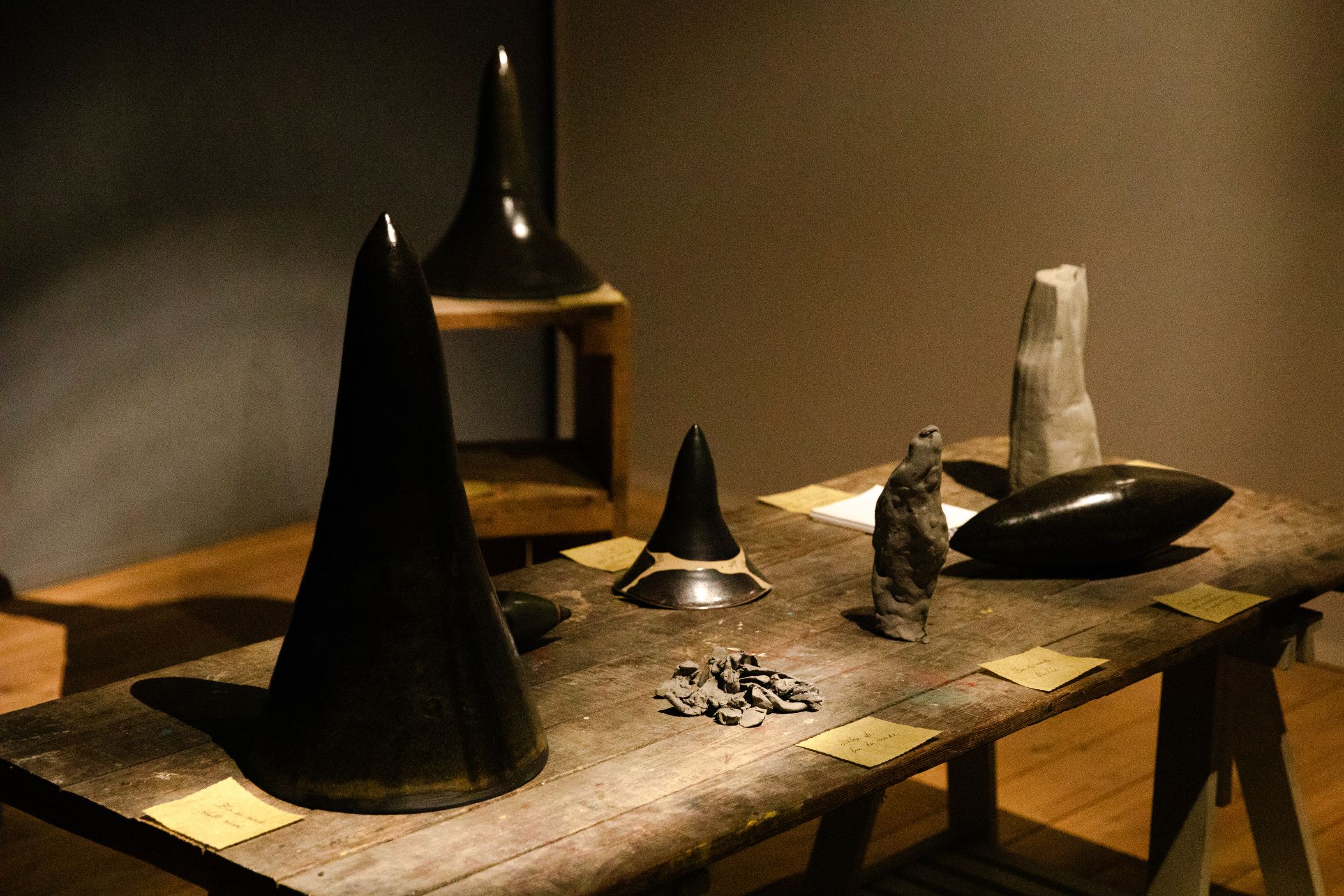
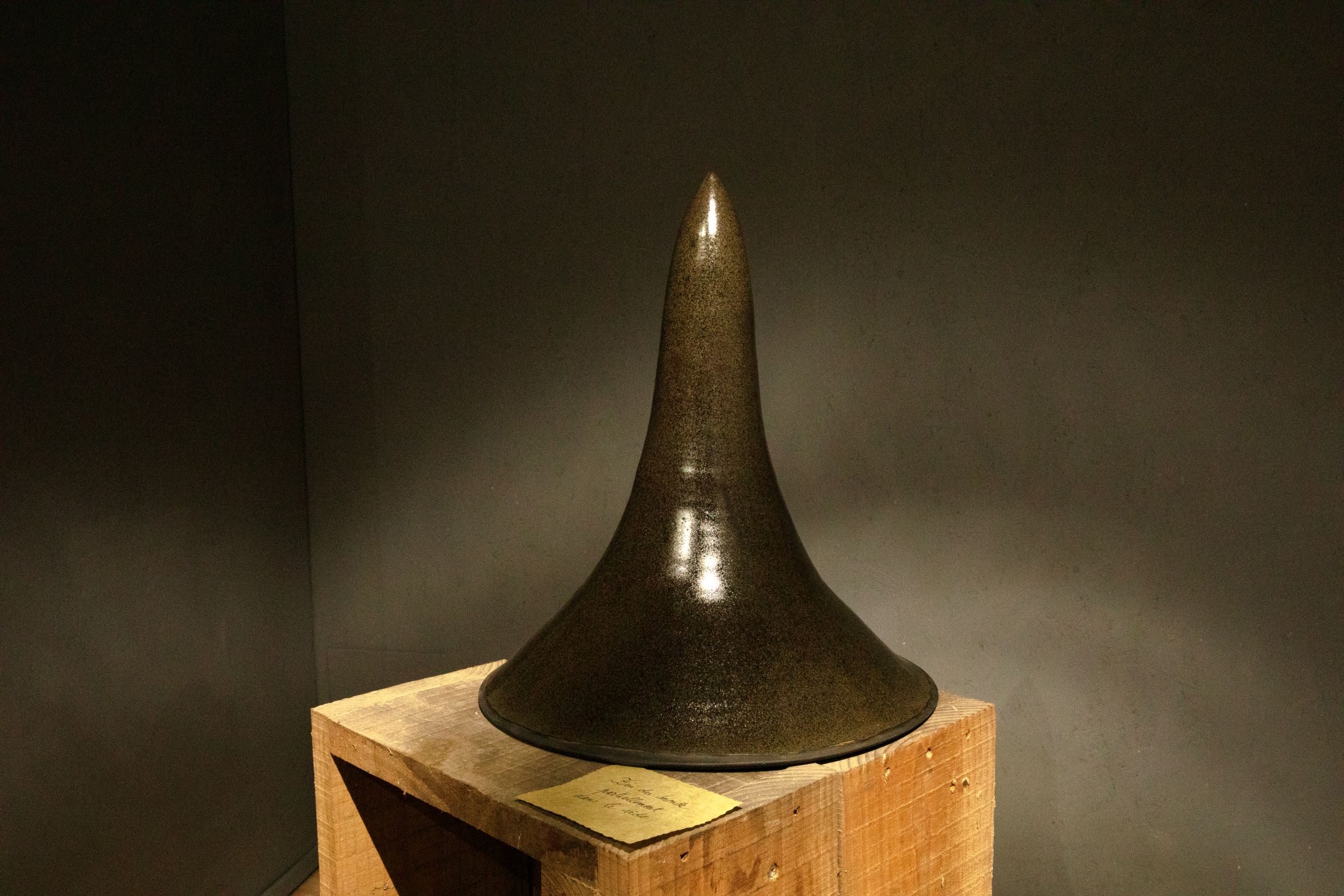
Composed of sandstone and clay pieces, the installation Ends of the World (Attempts) presents various attempts—some more successful than others—to create the end of the world. These eschatological sculptures embody the three most likely scientific hypotheses for the end of the universe.
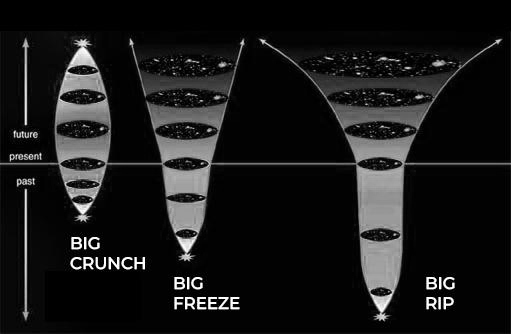
- The Big Crunch: expansion stops and then reverses, and the entire Universe contracts until it collapses into a single point.
- The Big Freeze: the Universe continues to expand indefinitely, becoming colder and colder, until all activity ceases.
- The Big Rip: the expansion of the universe becomes so violent that it tears everything apart, from galaxies to atoms.
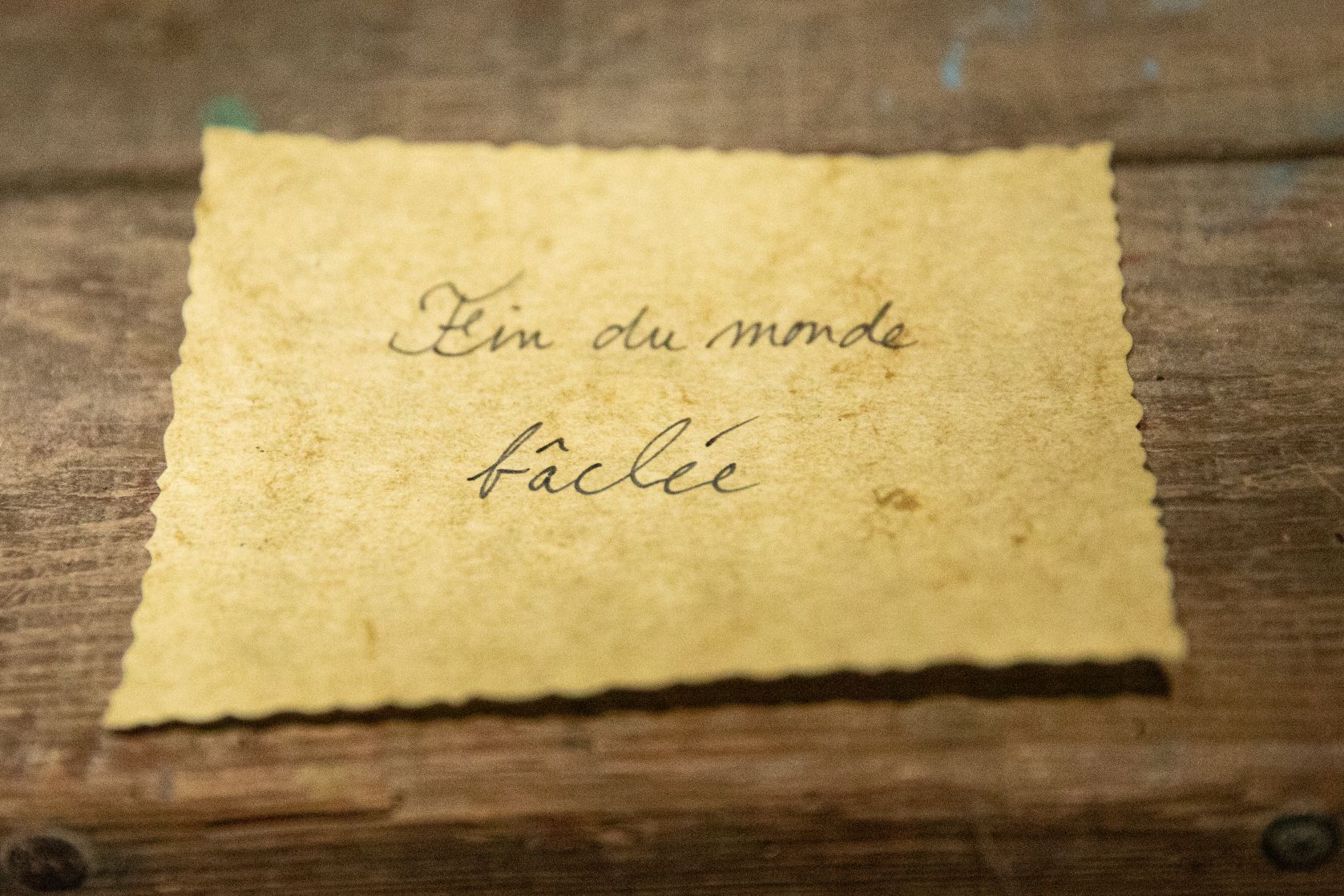
These attempts to create the end of the world are, in homage to Robert Filliou, ironically commented on by the labels (“sloppy end of the world,” “end-of-the-world debris,” etc.).
This installation is accompanied by the sound installation The Creation of the End of the World, which is a dialogue between the artist and an AI. Inspired by the seven-day account in Genesis, it questions the creative process behind the installation Ends of the World (Attempts). This installation is part of the exhibition Ex Nihilo.



PARTNERS
Support & Funding
This project is supported by the Splash funding program, led by RN13BIS – Contemporary Art in Normandy, with the support of the DRAC Normandy and the Normandy Region.
Scientific Partners
This project was developed in partnership with the Astroparticle & Cosmology Laboratory (APC) led by the University of Paris, the CNRS, the DIM-Origines of the Île-de-France region, and the ANR. It was also developed in partnership with the INFN in Italy and the Institute of Detection and Astroparticle Technology (ITeDA) in Argentina, led by the National Atomic Energy Commission (CNEA), the National Scientific and Technical Research Council (CONICET), the University of San Martín (UNSAM) and the UTN Mendoza.